
Is India’s Real Estate Market Slowing Down or Simply Evolving?
Understanding the Reality Behind the Perceived Slowdown
Over the past few months, there has been increasing conversation around a possible slowdown in India’s real estate market. Developers report slower conversions, agents highlight declining lead quality, and buyers appear more cautious than ever.
This has led to a common narrative: the market is slowing down.
However, a deeper analysis suggests that what we are witnessing may not be a market crash, but a structural shift in how real estate transactions are discovered, evaluated, and executed.
A Closer Look at the Current Market Sentiment
Across the ecosystem, different stakeholders are experiencing similar friction points:
Developers and Builders
Projects are being launched, inventory is available, and marketing efforts continue to increase. Yet, the gap between interest and conversion is widening. Reaching the right audience at the right time remains a persistent challenge.
Real Estate Agents and Brokers
While enquiries continue, the quality of leads has become inconsistent. A significant portion of interactions do not translate into serious intent, resulting in increased effort with reduced efficiency.
Buyers and Tenants
Today’s buyers are more informed and research-driven. However, they are also overwhelmed by scattered information, inconsistent pricing, and a lack of transparency. This often leads to decision fatigue and delayed commitments.
Identifying the Core Issue
The current situation points to a fundamental issue—not of demand or supply, but of fragmentation within the ecosystem.
Property discovery happens across multiple disconnected platforms
Communication is spread across calls, messages, and intermediaries
Information lacks standardization and real-time updates
As a result, every stakeholder operates in silos, limiting efficiency and slowing down transactions.
The Shift in Buyer Behaviour
The modern real estate consumer has evolved:
They expect transparency and clarity
They prefer direct access to relevant stakeholders
They rely heavily on digital discovery and comparison
Traditional methods of property discovery and sales are no longer sufficient to meet these expectations.
Is the Market Slowing Down?
Rather than a slowdown in demand, the current phase reflects a transition period.
Markets do not always decline; they often transform. When existing systems fail to meet evolving expectations, inefficiencies increase, creating the perception of slowdown.
In reality, this phase signals the need for a more connected, transparent, and efficient approach to real estate.
The Way Forward
To improve transaction speed, trust, and efficiency, the real estate ecosystem needs:
Centralized discovery mechanisms
Direct interaction between stakeholders
Better visibility and verified information
Reduced dependency on fragmented communication channels
A more integrated approach can significantly enhance how properties are discovered and transacted.
Conclusion
The Indian real estate market is not necessarily slowing down—it is undergoing a shift.
Stakeholders who recognize and adapt to this change will be better positioned to succeed in the evolving landscape.
The future of real estate lies in creating a more connected ecosystem where buyers, sellers, agents, and professionals can interact seamlessly and make informed decisions with confidence.
Recent Posts

Home Loan ke 10 Terms Jo Aapko Samajhni Hi Chahiye - Before You Sign
30 Jun 2026
Location, Location, Location: The 8 Questions to Ask Before Buying in Any Area
24 Jun 2026
2 BHK vs 3 BHK: The Decision Framework Indian Families Keep Getting Wrong
23 Jun 2026
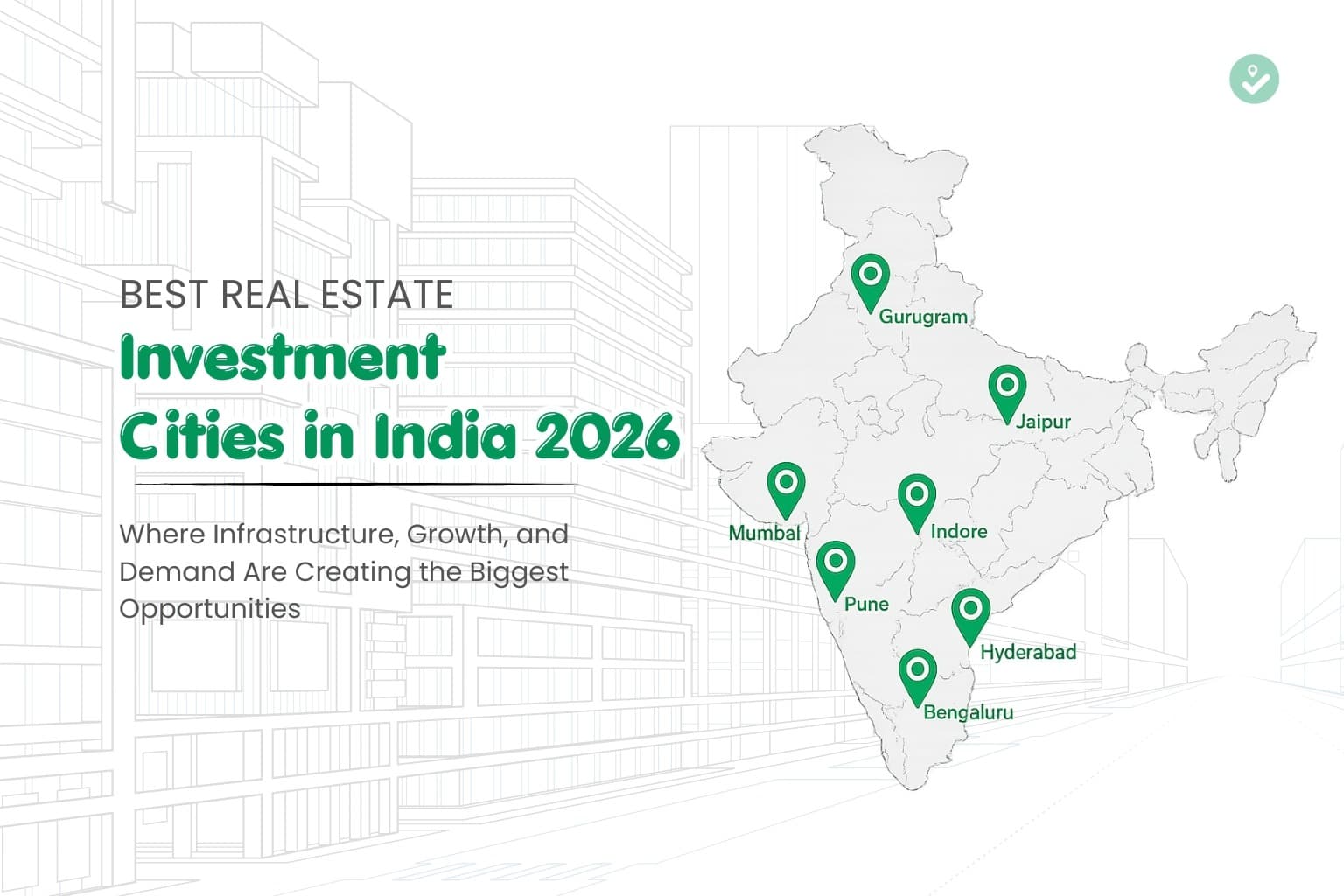
Best Real Estate Investment Cities in India for 2026
28 May 2026
Cost Overruns in Construction: Causes and Solutions
28 Apr 2026