
Cost Overruns in Construction: Causes and Solutions
Understanding Why Projects Exceed Budgets—and How to Prevent It
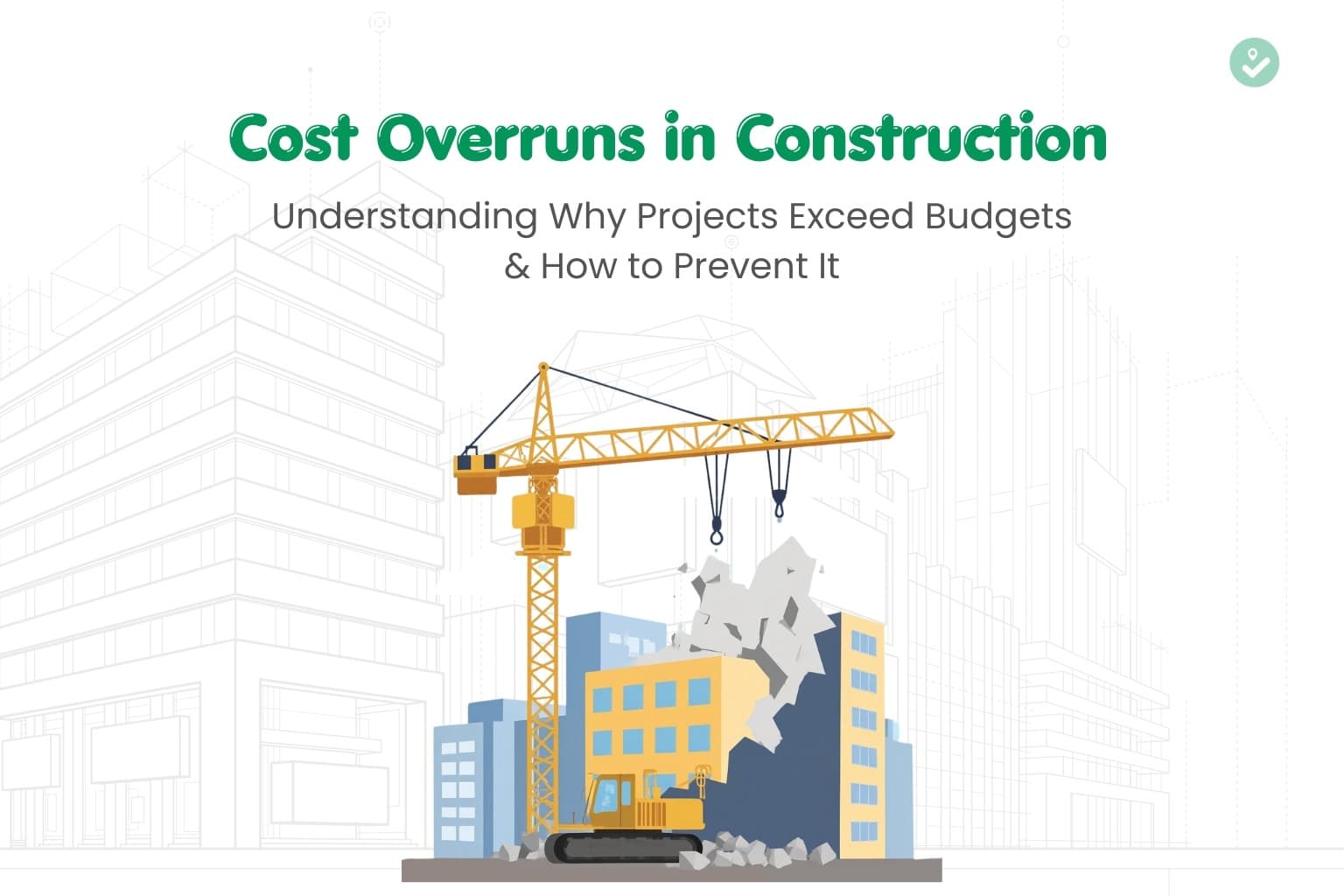
Cost overruns are one of the most persistent challenges in the construction industry. Across residential, commercial, and infrastructure projects, budgets frequently exceed initial estimates - sometimes by significant margins.
These overruns do not just affect project profitability. They delay timelines, strain stakeholder relationships, and, in many cases, impact the final pricing of real estate assets.
Understanding the root causes of cost overruns is essential for developers, contractors, and consultants aiming to deliver projects efficiently and sustainably.
What Are Cost Overruns?
A cost overrun occurs when the actual project cost exceeds the initially approved budget.
This can happen at any stage of the project lifecycle - from planning and design to execution and delivery.
In many projects, overruns are not caused by a single factor, but by a combination of planning gaps, execution inefficiencies, and external market conditions.
Key Causes of Cost Overruns
1. Inaccurate Project Estimation
One of the most common causes is underestimation during the planning phase.
Incomplete project scope
Lack of detailed cost breakdown
Overly optimistic assumptions
When initial estimates are not grounded in realistic data, the budget becomes vulnerable from the outset.
2. Frequent Design Changes
Design modifications during execution can significantly increase costs.
Changes in layout or specifications
Client-driven revisions
Lack of finalized drawings at the start
Each change leads to rework, material adjustments, and delays.
3. Material Price Volatility
Construction costs are highly sensitive to fluctuations in key materials such as:
Steel
Cement
Fuel
Global supply chain disruptions, inflation, and geopolitical factors can lead to sudden cost increases.
4. Poor Project Planning and Scheduling
Inefficient planning often results in:
Idle labor or equipment
Delays in procurement
Overlapping tasks without coordination
Time overruns directly translate into cost overruns.
5. Weak Contractor and Vendor Management
Lack of coordination between contractors, subcontractors, and suppliers can lead to:
Delayed deliveries
Quality issues
Rework and wastage
Execution inefficiencies are a major contributor to budget overruns.
6. Regulatory and Approval Delays
Delays in obtaining approvals, permits, or compliance clearances can halt project progress.
These interruptions increase:
Holding costs
Interest burden
Operational expenses
7. Inadequate Risk Management
Many projects fail to account for potential risks such as:
Market fluctuations
Labor shortages
Unexpected site conditions
Without contingency planning, even minor disruptions can escalate costs.
The Impact of Cost Overruns
Cost overruns have a cascading effect across the real estate ecosystem:
Developers face reduced margins and financial pressure
Contractors deal with operational inefficiencies
Buyers may experience price escalation or delays
Investors face uncertainty in returns
Over time, repeated overruns can affect trust and credibility within the market.
Practical Solutions to Control Cost Overruns
1. Detailed and Data-Driven Planning
Conduct thorough feasibility studies
Use historical cost data for accurate estimation
Define project scope clearly before execution
2. Freeze Design Before Execution
Ensuring that designs are finalized before construction begins reduces the risk of costly changes later.
3. Strong Cost Monitoring Systems
Track expenses in real time
Compare planned vs actual costs regularly
Use digital tools for budget control
4. Efficient Procurement Strategy
Lock in material prices where possible
Build reliable supplier networks
Plan procurement timelines carefully
5. Improve Coordination Across Stakeholders
Clear communication between developers, contractors, and consultants ensures smoother execution and fewer errors.
6. Risk Management and Contingency Planning
Allocate contingency budgets
Identify potential risks early
Prepare mitigation strategies
7. Adoption of Technology
Modern construction increasingly relies on:
Project management software
Building Information Modeling (BIM)
Data analytics for cost tracking
Technology helps reduce inefficiencies and improves overall control.
Conclusion
Cost overruns are not inevitable - they are often the result of gaps in planning, coordination, and execution.
As real estate projects become more complex, the need for structured systems, accurate data, and disciplined project management becomes critical.
Controlling costs is no longer just about saving money. It is about delivering projects on time, maintaining trust, and ensuring long-term sustainability in the real estate ecosystem.
Recent Posts

Home Loan ke 10 Terms Jo Aapko Samajhni Hi Chahiye - Before You Sign
30 Jun 2026

Location, Location, Location: The 8 Questions to Ask Before Buying in Any Area
24 Jun 2026
2 BHK vs 3 BHK: The Decision Framework Indian Families Keep Getting Wrong
23 Jun 2026

Best Real Estate Investment Cities in India for 2026
28 May 2026

Step-by-Step Guide to Buying Your First Property
28 Apr 2026